In this chapter
- Buyers with tax residence abroad took about 5% of the homes sold in 2025, and that share has been falling for three years.
- Adding the foreign nationals who live in Portugal, foreign citizens made 27.6% of purchases by households. Most of them live here.
- Buyers from outside the EU paid, on average, twice as much as buyers resident in Portugal.
- The NHR regime was created and closed by PS governments; the golden visa was created by the PSD/CDS government and closed to property by the PS.
Three populations, three denominators
In 2025, buyers with tax residence abroad bought 8,471 homes (−13.3%), for €3.4bn: about 5.0% of homes sold and 8.3% of the valuePrimary sourceINE — Índice de Preços da Habitação, 4.º trimestre de 2025Prices +17.6% in 2025; 169,812 transactions; purchases by households (148,632) and by non-residents (8,471).Open the original ↗. But these are the non-residents. Counting also the foreign nationals who live in Portugal, foreign citizens made 41,086 of the 148,632 purchases by households, or 27.6%Secondary sourceECO — Uma em cada quatro casas vendidas em 2025 foi para mãos estrangeiras41,086 purchases by foreign nationals (households); mortgage lending.Open the original ↗.
Who bought homes in 2025: purchases by households
Number of purchases · 148,632 in total · by nationality and tax residence of the buyer
Official data INE, via ECO (24-03-2026). Portuguese buyers and foreign buyers resident abroad: Own calculation.
Household purchases only; companies are not included. "Tax residence" is not the same as a residence permit.
Why 8,471 and 6,248 do not match
The 8,471 buyers with tax residence abroad include all sectors and all nationalities, including Portuguese emigrants. The 6,248 are only households of foreign nationality with tax residence abroad (41,086 − 34,838). “Resident” in these statistics means tax residence, not a residence permit.
Fewer buyers, higher prices
Non-residents have never been more than 8% of transactions in the last seven years, and their share by value fell from about 13% at the end of 2023 to 8% in Q2 2025Secondary sourceidealista/news — Compras por não residentes e agravamento do IMTNon-residents never above 8% of transactions in seven years; share by value down from 13% to 8%.Open the original ↗. But they pay more: €234,120 on average for buyers resident in Portugal, €335,640 for those from the EU and €470,277 for the restPrimary sourceINE — Índice de Preços da Habitação, 4.º trimestre de 2025Prices +17.6% in 2025; 169,812 transactions; purchases by households (148,632) and by non-residents (8,471).Open the original ↗. The Banco de Portugal estimates that foreign buyers, resident or not, can pay on average 43% more for a homeSecondary sourceDiário de Notícias — Estrangeiros têm capacidade de pagar mais 43% por uma casa que os portuguesesBanco de Portugal estimate: foreign buyers pay on average 43% more.Open the original ↗.
How much each buyer paid on average in 2025
Average price per home sold · euros · by the buyer's tax residence
Official data INE, House Price Index, Q4 2025.
A higher average price also reflects the type and location of the homes bought, not only the ability to pay.
A local effect
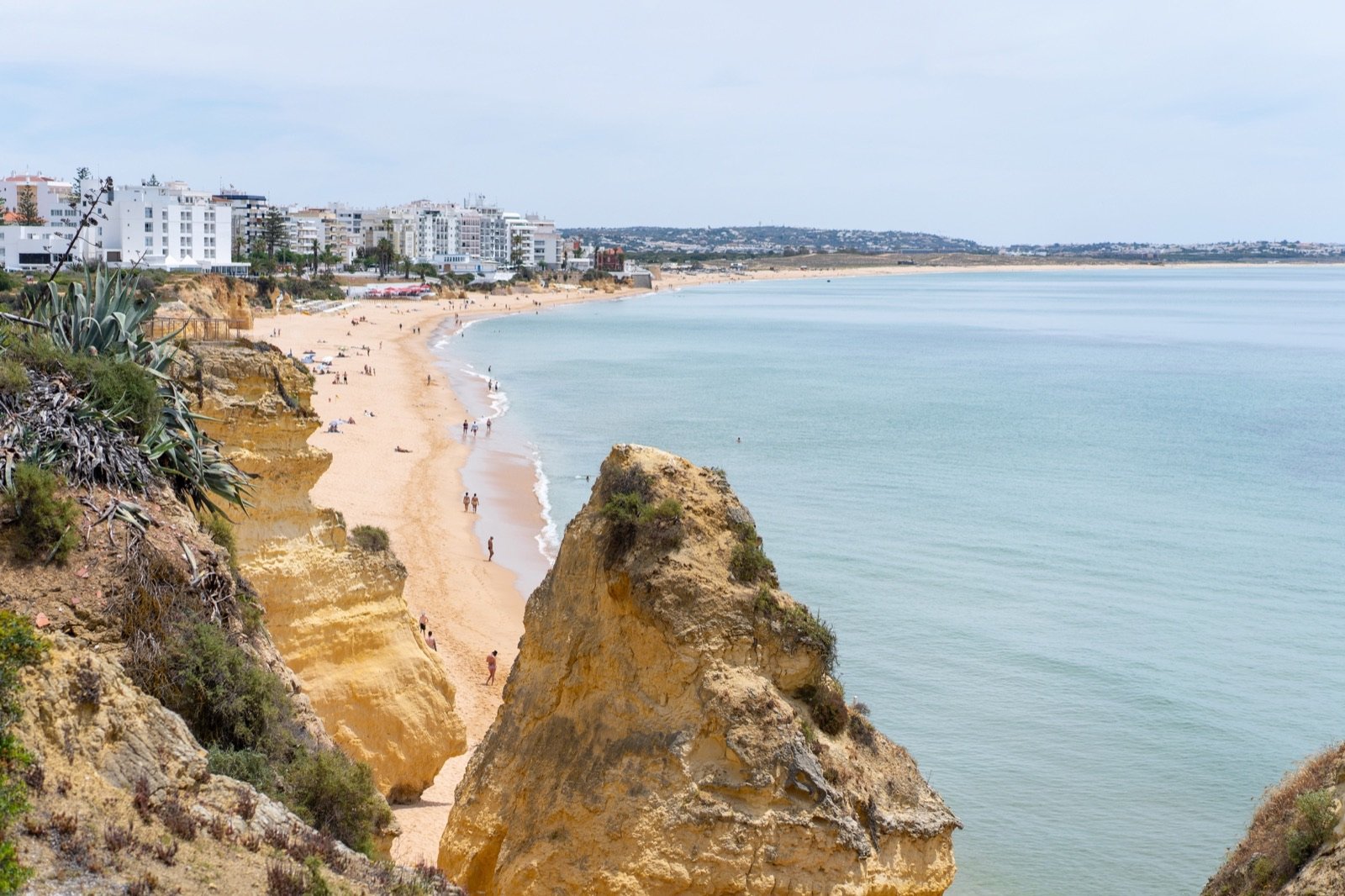
Foreign demand is concentrated in the Algarve, Lisbon and Madeira. A 2026 Banco de Portugal study points to the Algarve as a case of inelastic supply combined with investment-driven non-resident demandSecondary sourceObservador — Crise da habitação não se resolve com políticas do lado da procuraSummary of the Banco de Portugal study (Amador).Open the original ↗. The 2024 study considers the effect of foreign demand on the national median price “generally limited”, without ruling out spillovers to other areasPrimary sourceBanco de Portugal — Lourenço, Moura e Rodrigues, Revista de Estudos EconómicosOvervaluation since 2017; effect of foreign demand on the median price "generally limited".Open the original ↗.
The largest group of foreign buyers lives in Portugal: Brazilians bought 9,808 homes in 2025, 23.9% of purchases by foreign nationals. Foreign nationals took out 11.7% of mortgage contracts in 2025, against 6.1% in 2021Secondary sourceECO — Uma em cada quatro casas vendidas em 2025 foi para mãos estrangeiras41,086 purchases by foreign nationals (households); mortgage lending.Open the original ↗. This part of “foreign” demand is linked to immigration, not to external investment.
NHR and golden visas: who created them and who ended them
The Non-Habitual Resident (NHR) regime was created in 2009 by José Sócrates’s PS government and closed to new entrants by the 2024 State Budget of António Costa’s PS government, with a transitional regime and a narrower replacement, IFICISecondary sourceForvis Mazars — O (quase) fim do RNHEnd of the NHR regime and transitional regime.Open the original ↗. It had 114,645 beneficiaries in 2023, and the tax expenditure rose from €620m in 2019 to €1,741m in 2024Secondary sourceidealista/news — IGF: beneficiários e despesa fiscal do RNH114,645 beneficiaries in 2023; tax expenditure from €620m (2019) to €1,741m (2024).Open the original ↗.
The residence permit for investment (golden visa) was created in 2012 by Passos Coelho’s PSD/CDS government, during the assistance programme. The Costa government restricted the property route to the interior and the autonomous regions from 2022 and ended it in 2023, with the Mais Habitação programme. Between 2012 and September 2023 there were 12,718 permits and €6,450m of investment, about 3% of the value of housing transactions in the periodSecondary sourceObservador — Fact-check: vistos gold foram só 3% do investimento na compra de casas12,718 permits; €6,450m (2012 – Sep 2023).Open the original ↗.
In 2026 the Montenegro government set a flat IMT (property transfer tax) rate of 7.5% on home purchases by non-residents, with three exceptions: the buyer is already tax resident, becomes tax resident within two years, or rents the home at a moderate rent for at least 36 monthsPrimary sourceDiário da República — Decreto-Lei n.º 97/2026 (IVA a 6%, IMT para não residentes, RSAA)Official text read.Open the original ↗. It did not reopen the property route of the golden visa.
What this does not prove
Both regimes were closed to new entrants before April 2024. What can be debated is the effect of the existing beneficiaries. There is no independent study quantifying the effect of the NHR regime or golden visas on national prices (log item V09), so this investigation does not claim any figure.
Counter-arguments
- In areas such as the Algarve or central Lisbon, 5% of transactions at much higher prices can push local prices up, even if the national effect is limited.
- Buyers with more ability to pay can influence what developers decide to build, steering supply towards the top end.